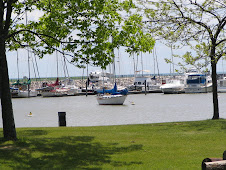
Happy to report that KOHL's Manitowoc located in HarborTown is now OPEN and the new store is LEED (Leadership in Energy and Environmental Design) certified, illustrating Kohl's commitment to environmental, green initiatives!
Friday, October 3, 2008
KOHL's - Manitowoc
Happy to report that KOHL's Manitowoc located in HarborTown is now OPEN and the new store is LEED (Leadership in Energy and Environmental Design) certified, illustrating Kohl's commitment to environmental, green initiatives!

Tuesday, September 30, 2008
An Inconvenient Bag by Ellen Gamerman, WallStreet Journal

The article is about the conundrum of the reusable shopping bag.
It's manufactured in China, shipped thousands of miles overseas, made with plastic and could take years to decompose. The bags usually are printed with environmental slogans as well as corporate logos and pitched as 'earth-friendly' substitutes for the billions of disposable plastic bags that wind up in landfills every year. But this is...another area where it's complicated to go green. "If you don't reuse them, you're actually worse off by taking one of them," says Bob Lilienfeld, author of the Use Less Stuff Report (an online newsletter about waste prevention). http://www.use-less-stuff.com/ Because many of the bags are made from heavier material, they're likely to sit longer in landfills than their thinner, disposable cousins. Used as they were intended, the totes can be an environmental boon, vastly reducing the number of disposable bags that do wind up in landfills. If each bag is used multiple times - at least once a week - four or five reusable bags can replace 520 plastic bags a year, says Nick Sterling, reserach director at Natural Capitalism Solutions, a nonprofit focused on corporate sustainability issues. "Think about it," [Lee] Scott said in his big speech to employees last fall. "If we throw it away, we had to buy it first. So we pay twice - once to get it, once to have it taken away. What if we reverse that? What if our suppliers send us less, and everything they send us has value as a recycled product? No waste, and we get paid instead."
Many of the cheap, reusable bags that retailers favor are produced in Chinese factories and made from non-woven polypropylene, a form of plastic that requires about 28 times as much energy to produce as the plastic used in standard disposable bags and eight times as much as a paper sack, according to Mr. Sterling.
Thursday, September 25, 2008
Tuesday Evening Farmers Market

Starting with the 2009 season, running from approximately Jun 15th-September 15th, from 4pm-8pm, there will be a Tuesday EVENING Farmers Market instead of a Tuesday morning market in the City of Manitowoc. Located on Manitowoc's downtown riverfront across from the Manitowoc Public Library :-)
Tuesday, September 23, 2008
Manitowoc Recycling Center Offers Free Sifted Compost
The Manitowoc County Recycling Center will be offering free sifted compost at the Basswood and Woodland Drive compost sites throughout the month of October. Normally $10.50 per cubic yard, this material will be given away while supplies last. Our Sifted Compost is made from decomposed leaves, grass clippings and garden wastes and has been screened to remove large clumps. Many people use this compost to make garden beds, condition the soil in old garden beds, add to potted plant mix, seed or top-dress lawns, and as cover for filled areas. Compost has also been used successfully in areas where soil erosion is a problem. Compost generally has more nutrients than topsoil and it releases these nutrients slowly as the organic materials break down. It can help sandy soil retain moisture and help loosen and break up clay soils. Few weed seeds are contained in compost as they are typically destroyed during the composting process.
Guidelines
You may load your own for free at either the Basswood or Woodland Compost Site.
Loading is available Monday to Fridays from 7am to 3:45pm at the Basswood Site. There is a small fee of $2. Stop at the Main Office first.
Limit of 5 cubic yards per visit.
Deliveries are available for $26.25 per load.
This offer is available while supplies last.
Businesses and farms that need large amounts should contact the Recycling Center at 683-4333 for details.
For questions or more information contact the Manitowoc County Recycling Center at 683-4333 or visit online at www.manitowocrecycles.org
Location and Hours
Basswood Compost Site
3000 Basswood Drive
Manitowoc, WI
Monday – Friday: 7am to 4pm
Saturday: 8am to Noon
Woodland Drive Compost Site
4191 Woodland Drive
Two Rivers, WI
Monday – Friday: 10am to 6pm
Saturday: 8am to 4pm
Guidelines
You may load your own for free at either the Basswood or Woodland Compost Site.
Loading is available Monday to Fridays from 7am to 3:45pm at the Basswood Site. There is a small fee of $2. Stop at the Main Office first.
Limit of 5 cubic yards per visit.
Deliveries are available for $26.25 per load.
This offer is available while supplies last.
Businesses and farms that need large amounts should contact the Recycling Center at 683-4333 for details.
For questions or more information contact the Manitowoc County Recycling Center at 683-4333 or visit online at www.manitowocrecycles.org
Location and Hours
Basswood Compost Site
3000 Basswood Drive
Manitowoc, WI
Monday – Friday: 7am to 4pm
Saturday: 8am to Noon
Woodland Drive Compost Site
4191 Woodland Drive
Two Rivers, WI
Monday – Friday: 10am to 6pm
Saturday: 8am to 4pm
Ride Your Bike / World CarFree Day

With soaring gasoline prices — and a hint of autumn in the air — there’s never been a better time to start bicycling to work. Here’s how to get rolling!
Today is World Carfree Day . Now in its eighth year, this international event is a terrific showcase for alternative means of moving people from place to place. Even if you can’t leave your car in the driveway this morning, it’s a great time to consider walking, public transportation — and the greenest, most efficient form of transport ever devised: cycling.
Once a novelty of the Industrial Revolution, bicycles now supply millions of people with efficient, healthy, pollution-free daily transportation. Bicycles can reduce traffic congestion and noise. You can park a dozen bikes in the space of a single automobile, and the idea of a morning commute free of fossil fuels seems particularly attractive in the face of rising fuel costs.
Even if you only cycle once a week — on Casual Fridays, perhaps — you’ll be reducing your weekly commute’s environment by 20 percent. That’s about the same as trading your current vehicle for a hybrid, and a lot cheaper.
Yes, you’ll sweat. No, you won’t smell like a horse around the office. Yes, you can really do this. You’ll be healthier and a little richer for the experience.
But commuting by bicycle takes planning. Let’s get started!
Make it work at the office
Today is World Carfree Day . Now in its eighth year, this international event is a terrific showcase for alternative means of moving people from place to place. Even if you can’t leave your car in the driveway this morning, it’s a great time to consider walking, public transportation — and the greenest, most efficient form of transport ever devised: cycling.
Once a novelty of the Industrial Revolution, bicycles now supply millions of people with efficient, healthy, pollution-free daily transportation. Bicycles can reduce traffic congestion and noise. You can park a dozen bikes in the space of a single automobile, and the idea of a morning commute free of fossil fuels seems particularly attractive in the face of rising fuel costs.
Even if you only cycle once a week — on Casual Fridays, perhaps — you’ll be reducing your weekly commute’s environment by 20 percent. That’s about the same as trading your current vehicle for a hybrid, and a lot cheaper.
Yes, you’ll sweat. No, you won’t smell like a horse around the office. Yes, you can really do this. You’ll be healthier and a little richer for the experience.
But commuting by bicycle takes planning. Let’s get started!
Make it work at the office
Tuesday, September 16, 2008
City of Manitowoc Wind Ordinance
At the 9/15/08 meeting of the Common Council of the City of Manitowoc, an alteration was made to the municipal code which now permits construction of up to two 350 foot wind towers in I-1 and I-2 (industrial) areas. This is a great GREEN step forward!!
Monday, September 15, 2008
Felician Village Uses Geothermal Heating and Cooling Technology

Congratulations to Felician Village!! As part of its current building project, Felician Village will incorporate an energy-efficient technolgoy called ground source heat pumps (GSHPs), a green system that will heat and cool its facilities.
GSHPs are environmentally friendly and energy efficient. In a GSHP setup, the earth provides over 70% of the energy required to heat and cool. Underground loops are used to transfer heat with no external venting and no air pollution.
In the case of Felician Village, approximately 127,000 square feet will be heated and cooled with the new GSHP system.
Way to Go Green!!
Thursday, September 11, 2008
Conservation of Aquatic Resources

In an effort to conseve aquatic resources, the Japan Fisheries Association has recently established the Marine Eco-Label Japan pictured here.
It serves to certify marine products that are harvested through ecologically sustainable methods and raise consumer awareness of the need for sustainable fisheries.
Wisconsin's sister-state, Chiba Prefecture, Japan has been called "Tokyo's Kitchen" with a long history of supplying rice and vegetables for the Tokyo region. Many of Chiba's agricultural products are grown with the use of minimal chemicals and fertilizers, making fruits and veges labeled "Grown in Chiba" highly sought after. --JETRO
Natural Step STUDY CIRCLE begins Oct. 7

Learn more about sustainability, your community, and how you can "go green". Join a Natural Step Study Circle with other sustainability advocates from around the community. Discussions are based on the book "The Natural Step for Communities: How Cities and Villages can Change to Sustainable Practices" by Sarah James and Torbjorn Lahti. Participation is free and everyone is welcome. Books are availabe for purchase or borrowing. The next study circle will be hosted at Silver Lake College on Tuesday afternoons from 3-4pm starting October 7, 2008 through November 25.
To sign up, email tprigge@manitowoc.org or call 686-6980.
Wednesday, September 10, 2008
Solar Power might help Menasha cut pool expenses
According to a Post-Cresent, Sept. 8, 2008 article by Michael King the City of Menasha Parks and Recreation Department is exploring the possibility of using solar power to heat the municipal swimming pool at Jefferson Park in an effort to reduce costs. Chris Voigtlander, Menasha Utilities energy services representative, said the setup could save significant natural gas costs.
The site assessment was completed by Green Sky Energetics, a Manitowoc firm.
The site assessment was completed by Green Sky Energetics, a Manitowoc firm.
Roundabouts: Help Save Drivers Time and Gas Money

In this September 15, 2008 TIME article 'YOU WANT A REVOLUTION' by Tim Padgett, it states that "because roundabouts force cars to travel through a crossroads in a slower but more free-flowing manner - unlike traffic circles, roundabouts have no stop signals - in seven years, Carmel, IN has seen a 78% drop in accidnets involving injuries, not to mention a savings of 24,000 gallons of gas per year per roundabout because of less car idling."
"About 1,000 roundabouts have been built in 25 states, and reserach bears out the benefits to states like Kansas, where the new design has produced a 65% average drop in vehicular delays ... Most roundabouts are also more aesthetically pleasing and cost much less to construct and maintain than stoplight intersections."
The problem? "Teaching Americans how to navigate roundabouts". Big hint: cars entering a roundabout YIELD to those already in it. "The heightened anxiety people feel in roundabouts makes them drive more carefully, and remember that intersections are dangerous places ... therefore, according to Tom Vanderbilt, 'The system that makes us more aware of this is actually the safer one'."
DID YOU KNOW Tim Padgett, TIME
- With all cars traveling in the same direction, roundabouts eliminate head-on collisions, as well as left turns, one of the most dangerous moves in an intersection;
- With no traffic lights to divert drivers' attention upward, roundabouts keep motorists focused on the cars and pedestrians around them;
- In addition to improving traffic flow, roundabouts are often easy on the eye, with elegant landscaping;
- France has about 30,000 roundabouts, nearly a third of the world's total;
- Roundabouts cut hydrocarbon emissions at intersections by as much as 42%;
- Ten roundabouts in Virginia save 200,000 gallons of gas a year.
Tuesday, September 9, 2008

Monday, September 8, 2008
Blue Bike Free Bike Program is Coming to Manitowoc

The threefold purpose of the Blue Bike Program is to reduce the use of internal combustion engines, to help citizens get comfortable with the use of bicycles for transportation and to improve the health of our citizens through exercise.
For More information contact Maritime Metro Transit at 683-4560.
Leave Your Car at Home Week Challenge

Leave your car at home week challenge takes place September 22 - 28, 2008. If you can do it for a week, you can do it for a lifetime!
For more information visit the City of Manitowoc website at www.manitowoc.org or call Maritime Metro Transit at 683-4560.
Frequently Asked Questions
What is Leave Your Car at Home Week?
The week is a challenge to reduce the use of personal vehicles. If people can consciously drive less for one week, they may find the benefits of those habits are worth adopting into their everyday life.
Why is it set for Sept. 22-28?
Sept. 22 is World Car Free Day, which promotes alternative forms of transportation around the globe.
I am unemployed, or my company is not participating in the Miles Not Traveled Competition. Can I still get involved?
Yes, a log sheet for the general public is available at the Maritime Metro Transit Office, on the city of Manitowoc's Web Site: manitowoc.org or by calling the mobility manager at 920-686-6548.
What are the eligible activities?
Walking, telecommuting or teleconferencing, biking, using transit, carpooling, combining trips for personal errands, chose a local option rather than driving out of town for shopping and/or entertainment.
It isn't practical for me to give up my car for an entire week, because I use my personal vehicle in my job, drive my kids to school, don't live near transit, or other reasons. Can I still participate?
Leaving a car at home for the entire week is the "Platinum Goal." However, the initiative is to encourage people to rethink how they use their personal vehicles and reduce the number of trips made in a single-occupancy vehicle. More than 90 percent of all trips are made in a single-occupancy vehicle. This week is a good time to explore alternatives to driving alone and see if these habits do improve your quality of life while reducing your carbon footprint.
It seems difficult to put into practice, because of my lifestyle. What are some suggestions for going car-free or car-lite this week?
Buy a special week-long MMT bus pass for $10 and explore the routes – kids under age 4 ride for free with an adult. Meet some of the fellow parents at your child's school or day care and see if carpooling will eliminate some of the trips to through the drop-off lane. Talk to your co-workers about carpooling. Talk to your neighbors, and see if they can share driving to work if you near one another and/or similar schedule. Offer to take a neighbor with you to complete errands. Dust off that bike in the garage. Get out your walking shoes. If you travel throughout the workday, leave your car at work for the week and eliminate the use of your vehicle in your personal life. Be creative, the possibilities to alternative transportation are limitless.
Who is organizing this event?
The Manitowoc County Mobility Manager is organizing the promotion with assistance from Maritime Metro Transit, Manitowoc County Personnel Office, Holy Family Memorial CareVan Service, Lakeshore Technical College, and Painting Pathways.
What is the Manitowoc County Mobility Management Project?
This is a cooperative effort among Maritime Metro Transit, the Aging & Disability Resource Center, and other transportation stakeholders to coordinate transportation services in Manitowoc County. The mobility manager researches unmet transportation needs existing in Manitowoc County, and develops programs to meet those needs.
What is Leave Your Car at Home Week?
The week is a challenge to reduce the use of personal vehicles. If people can consciously drive less for one week, they may find the benefits of those habits are worth adopting into their everyday life.
Why is it set for Sept. 22-28?
Sept. 22 is World Car Free Day, which promotes alternative forms of transportation around the globe.
I am unemployed, or my company is not participating in the Miles Not Traveled Competition. Can I still get involved?
Yes, a log sheet for the general public is available at the Maritime Metro Transit Office, on the city of Manitowoc's Web Site: manitowoc.org or by calling the mobility manager at 920-686-6548.
What are the eligible activities?
Walking, telecommuting or teleconferencing, biking, using transit, carpooling, combining trips for personal errands, chose a local option rather than driving out of town for shopping and/or entertainment.
It isn't practical for me to give up my car for an entire week, because I use my personal vehicle in my job, drive my kids to school, don't live near transit, or other reasons. Can I still participate?
Leaving a car at home for the entire week is the "Platinum Goal." However, the initiative is to encourage people to rethink how they use their personal vehicles and reduce the number of trips made in a single-occupancy vehicle. More than 90 percent of all trips are made in a single-occupancy vehicle. This week is a good time to explore alternatives to driving alone and see if these habits do improve your quality of life while reducing your carbon footprint.
It seems difficult to put into practice, because of my lifestyle. What are some suggestions for going car-free or car-lite this week?
Buy a special week-long MMT bus pass for $10 and explore the routes – kids under age 4 ride for free with an adult. Meet some of the fellow parents at your child's school or day care and see if carpooling will eliminate some of the trips to through the drop-off lane. Talk to your co-workers about carpooling. Talk to your neighbors, and see if they can share driving to work if you near one another and/or similar schedule. Offer to take a neighbor with you to complete errands. Dust off that bike in the garage. Get out your walking shoes. If you travel throughout the workday, leave your car at work for the week and eliminate the use of your vehicle in your personal life. Be creative, the possibilities to alternative transportation are limitless.
Who is organizing this event?
The Manitowoc County Mobility Manager is organizing the promotion with assistance from Maritime Metro Transit, Manitowoc County Personnel Office, Holy Family Memorial CareVan Service, Lakeshore Technical College, and Painting Pathways.
What is the Manitowoc County Mobility Management Project?
This is a cooperative effort among Maritime Metro Transit, the Aging & Disability Resource Center, and other transportation stakeholders to coordinate transportation services in Manitowoc County. The mobility manager researches unmet transportation needs existing in Manitowoc County, and develops programs to meet those needs.
Wednesday, September 3, 2008
Grow a Note Cards and Paper
Wow. What a cool recycled product....plantable greeting cards and papers made with 100% post consumer waste. Each sheet is imbedded with seeds that when planted, the paper will recycle naturally into the soil as wild flower seeds grow. It's like sending a bouquet with every message.
If you'd like to learn more visit www.greenfieldpaper.com
Has anyone ever tried this product? Would love to hear your feedback.
If you'd like to learn more visit www.greenfieldpaper.com
Has anyone ever tried this product? Would love to hear your feedback.
Friday, August 29, 2008
Going Green: Sustainable Communities and Farms
Wisconsin Association of RC&D's Annual Conference hosted by Town and Country Resource, Conservation & Development THURSDAY, SEPTEMBER 11 AND FRIDAY, SEPTEMBER 12 at the Olympia Conference Center in Oconomowoc, WI 53066.
Do you want to learn more about a green lifestyle -- healthier for you and for the planet? Join this conference for an invigorating two days of discussion, learning, networking, and great local food! Whatever your focus -- urban or rural, local food or sustainable agriculture, conservation or preservation, individual or community -- connect with other Wisconsinites working towerads a more sustainable future, for us all.
Session Themes:
Do you want to learn more about a green lifestyle -- healthier for you and for the planet? Join this conference for an invigorating two days of discussion, learning, networking, and great local food! Whatever your focus -- urban or rural, local food or sustainable agriculture, conservation or preservation, individual or community -- connect with other Wisconsinites working towerads a more sustainable future, for us all.
Session Themes:
- Green Your Home & Work
- Conserving Natural Resources
- Fresh Local Food
- Green Energy
- Sustainable Agriculture
- Sustainable Communities
full registration available at www.townandcountryrcd.org or by calling 414-774-6562
Thursday, August 28, 2008
Port Cities Blue Bike Program
Stay tuned! The new Port Cities Blue Bike program is slated to debut this fall. Blue bikes will be provided at various locations around the city for residents and visitors to use for short trips.
Bicycle Friendly Community
Encouraging bicycling is an effective way to increase physical activity, improve air quality, reduce traffic congestion and oil dependence, and tackle climate change and obesity. To find out more about creating a bicycle friendly community visit http://www.bicyclefriendlycommunity.org/
1 World
2 Wheels
Bikes Belong Coalition:
1 World
2 Wheels
Bikes Belong Coalition:
- Bicycling improves quality of life. it gets you outside, relieves stress, makes you feel better, and creates a way to spend time with family and friends. Best of all, it's convenient, flexible and free. Whether for recreation, transportation, or competition, bicycling offers a lifetime of health and fun.
- Bike paths boost property values. Properties next to the Mountain Bay Trail in Wisconsin sell faster and for an average of 9% more than similar lots away from the trail.
- Someone who bikes four miles round-trip to work instead of driving keeps 51 punds of carbon monoxide out of the air each year and burns 36,000 calories - the equivalent of 10 pounds of fat.
- Just three hours of bicycling per week can redcue a person's risk of heart disease and stroke by 50%.
- Bicycling is an inexpensive, convenient way to stay fit and healthy. The annual operating cost of a bike is just 2.5% that of a car.
- Bicycling promotes healthier lifestyles; creates jobs and supports independent businesses; lowers healthcare costs; strengthens family bonds; provides a recreational outlet for youth; builds closer-knit communities; reduces polluting emissions; decreases road congestion; and lessens our dependence on foreign oil.
"When we make biking and walking safe and accessible, I believe millions more Americans will choose them ... thereby making us a healthier, trimmer, more fit nation." --Congressman James Oberstar (D-MN) of the US House Transportation and Infrastructure Committee
Wednesday, August 27, 2008
Don't get 'TIRED' of Recycling
The Manitowoc County Recycling Center will be holding the annual tire collection September 8 through September 20. This program allows Manitowoc County residents and businesses to properly dispose of their tires at a reduced rate. Through the years a significant amount of tires have been collected. In 2007 over 60 tons were collected and in 2006 over 67 tons were recovered.
Waste tires can be reused in a number of beneficial ways. They can be shred into rubber chips and used as artificial turf or as a groundcover in playgrounds. Tire rubber can be incorporated into asphalt roads, running tracks and used in other rubber products. Depending on what other materials are in the tire they may also be used as a fuel source.
The DNR estimates that Wisconsin produces 5 million waste tires a year. Tires have been banned from landfills since 1995 because they take up too much space and their bulky size makes them hard to keep buried. Unfortunately, tires have often been illegally dumped along roadways or in illegal stockpiles. Aside from looking like a mess this can cause environmental problems. Burning tires can release large amounts of pollutants into the air, water and soil.
Before those wear bars even begin to show you can help reduce the amount of tires being disposed of. Taking proper care of your tires can prolong the life of the tire. Following the scheduled rotation and maintaining proper air pressure can help you get more use out of them. Fixing alignment problems early can also save tire wear.
A few guidelines should be noted for this collection. When bringing in your tires please check in at the Main Office prior to dropping tires. Tires with rims will be accepted and charged at the weighed rate of 11 cents a pound or $220 a ton. Residents and businesses with large amounts of tires should call the Recycling Center prior to bringing them in. For more information you can call the Recycling Center at 920-683-4333 or visit www.manitowocrecycles.org.
Waste tires can be reused in a number of beneficial ways. They can be shred into rubber chips and used as artificial turf or as a groundcover in playgrounds. Tire rubber can be incorporated into asphalt roads, running tracks and used in other rubber products. Depending on what other materials are in the tire they may also be used as a fuel source.
The DNR estimates that Wisconsin produces 5 million waste tires a year. Tires have been banned from landfills since 1995 because they take up too much space and their bulky size makes them hard to keep buried. Unfortunately, tires have often been illegally dumped along roadways or in illegal stockpiles. Aside from looking like a mess this can cause environmental problems. Burning tires can release large amounts of pollutants into the air, water and soil.
Before those wear bars even begin to show you can help reduce the amount of tires being disposed of. Taking proper care of your tires can prolong the life of the tire. Following the scheduled rotation and maintaining proper air pressure can help you get more use out of them. Fixing alignment problems early can also save tire wear.
A few guidelines should be noted for this collection. When bringing in your tires please check in at the Main Office prior to dropping tires. Tires with rims will be accepted and charged at the weighed rate of 11 cents a pound or $220 a ton. Residents and businesses with large amounts of tires should call the Recycling Center prior to bringing them in. For more information you can call the Recycling Center at 920-683-4333 or visit www.manitowocrecycles.org.
Cost of Our Choices in Methods of Manipulating Lake Ecosystems
Lake management has not escaped the debate over chemical use. Small-scale chemical treatment of aquatic plants is common in Wisconsin and thee seems to be a growing demand for larger scale applications. In meetings across the state, citizens concerned with large-scale chemical applications are gathering to express their apprehension.
The widespread use of chemicals that serve all parts of our society began in earnest with the close of WWII. The payback for chemical use seemed to far outweigh any side effects. However, grim discoveries have come to light making more and more people suspicious, afraid and nervous about accepting the tempting promises over the environmental risks of chemical use.
The main way to chemically control aquatic plants on Wisconsin lakes through the 1950’s and 60’s was the use of sodium arsenite (which contains inorganic arsenic that can be fatal if swallowed) with over 2 million pounds used in 167 Wisconsin lakes. Another common treatment was copper sulphate. An accumulation of copper in bottom sediments can adversely affect important food chain organisms. Between 1959 and 1969, over 1.5 million pounds of copper sulfate were used in our lakes to kill snails thought to cause swimmers’ itch. With current knowledge, the idea of applying some of the chemicals used in the 50s and 60s as treatments would be unthinkable. Yet, back in the day it was thought of as a state-of-the-art practice.
Each year in Wisconsin there is growing pressure to do large and even whole-lake treatments to limit the growth of nuisance plants such as Eurasian water milfoil. We need to weigh the benefits and cost of our choices in methods of manipulating lake ecosystems to make sure the decisions we make today leave options open for those that will care for our lakes in the future.
—excerpt from Robert Korth, UW-Ex Lakes Specialist as published in ‘Lake Tides’
The widespread use of chemicals that serve all parts of our society began in earnest with the close of WWII. The payback for chemical use seemed to far outweigh any side effects. However, grim discoveries have come to light making more and more people suspicious, afraid and nervous about accepting the tempting promises over the environmental risks of chemical use.
The main way to chemically control aquatic plants on Wisconsin lakes through the 1950’s and 60’s was the use of sodium arsenite (which contains inorganic arsenic that can be fatal if swallowed) with over 2 million pounds used in 167 Wisconsin lakes. Another common treatment was copper sulphate. An accumulation of copper in bottom sediments can adversely affect important food chain organisms. Between 1959 and 1969, over 1.5 million pounds of copper sulfate were used in our lakes to kill snails thought to cause swimmers’ itch. With current knowledge, the idea of applying some of the chemicals used in the 50s and 60s as treatments would be unthinkable. Yet, back in the day it was thought of as a state-of-the-art practice.
Each year in Wisconsin there is growing pressure to do large and even whole-lake treatments to limit the growth of nuisance plants such as Eurasian water milfoil. We need to weigh the benefits and cost of our choices in methods of manipulating lake ecosystems to make sure the decisions we make today leave options open for those that will care for our lakes in the future.
—excerpt from Robert Korth, UW-Ex Lakes Specialist as published in ‘Lake Tides’
Subscribe to:
Posts (Atom)


 Posts
Posts